
Landscapes Built to Use Less Water
Xeriscaping in Campbell for water-efficient outdoor spaces and reduced landscape maintenance
Xeriscaping replaces traditional water-intensive lawns and plantings with drought-tolerant plants, decorative rock, mulch, and gravel surfaces that require minimal irrigation once established. Properties in Campbell with older irrigation systems or limited water access benefit from xeriscaping conversions that reduce ongoing water bills and eliminate the need for weekly mowing or fertilizing. Ted Cooper/Cooper Industries designs and installs xeriscape landscapes for residential front yards, commercial properties, and side yards where conventional turf struggles to thrive. The process involves removing existing lawn material, regrading for drainage, installing weed barrier and decorative rock or mulch, and selecting native or climate-appropriate plants that survive on rainfall and occasional supplemental watering.
Xeriscape installation begins with soil preparation and grading to direct water away from structures, followed by placement of weed barrier fabric that suppresses future weed growth beneath rock or mulch layers. Decorative rock, gravel, or mulch is spread to specified depths, and drought-tolerant plants are installed in strategic groupings with drip irrigation lines where needed during establishment.
Request a xeriscaping consultation to review plant options and design approaches for your outdoor space.
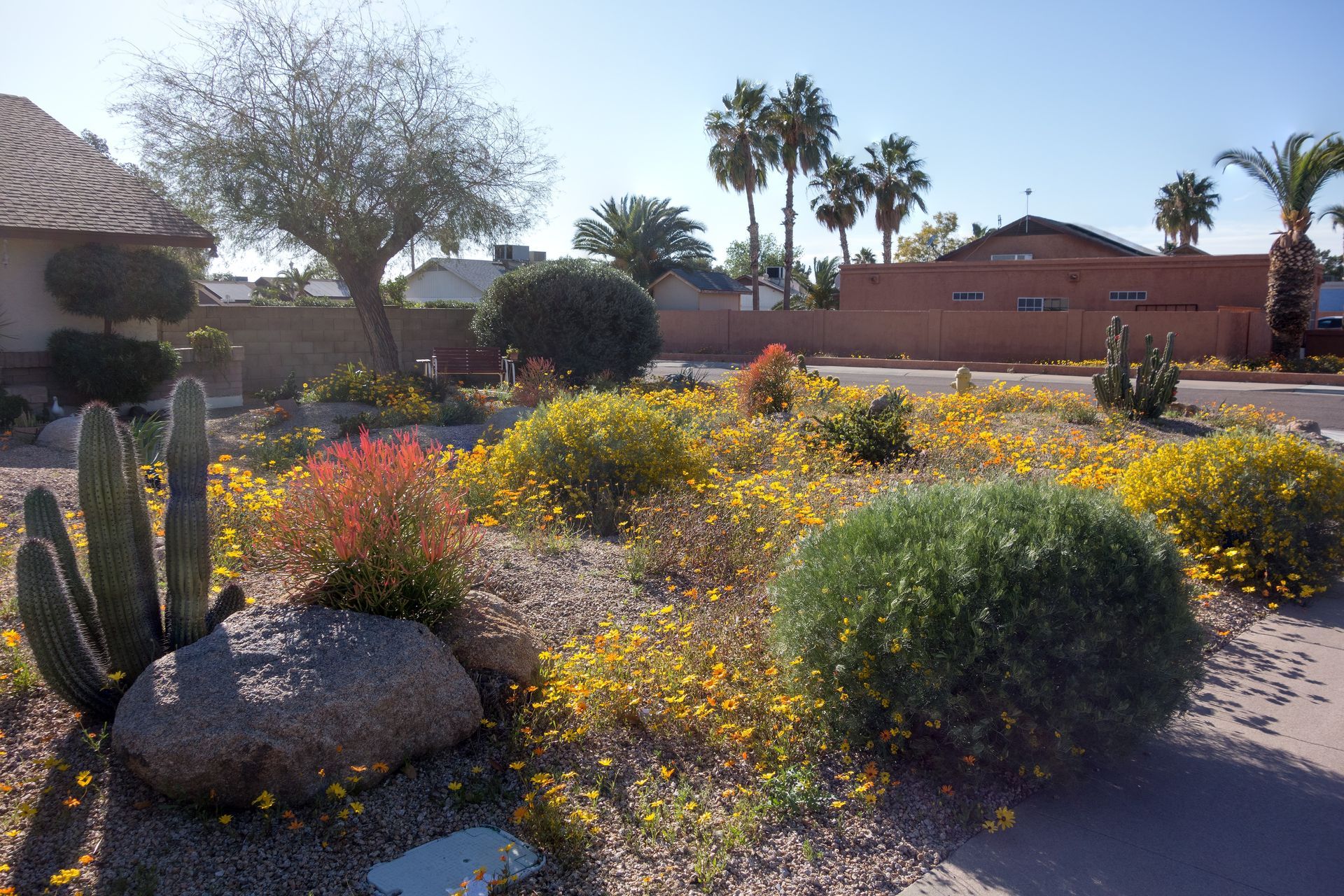
What Proper Xeriscaping Requires
Successful xeriscaping depends on proper plant selection, adequate weed barrier installation, and sufficient rock or mulch depth to prevent weed growth and retain soil moisture. Plants must match the sun exposure, soil type, and water availability of the site, and spacing must allow for mature plant size without crowding. Weed barrier must overlap at seams and extend beneath all rock or mulch areas, and rock depth must be at least three inches to suppress weeds and provide a stable surface.
After xeriscape installation, you see defined planting areas with groupings of shrubs, grasses, and perennials that provide color and texture without requiring mowing or constant pruning. Rock or mulch surfaces remain weed-free for months rather than weeks, and plants establish without daily watering once their root systems develop. The landscape retains its appearance through dry months without browning out or requiring emergency irrigation, and curb appeal improves because the design looks intentional rather than neglected.
Xeriscaping works well for south-facing front yards with full sun exposure, sloped areas where irrigation runoff wastes water, and properties where water bills or maintenance time have become prohibitive. The work does not include removal of mature trees or large shrubs that are healthy and contribute to the landscape design, which remain in place while surrounding turf is converted.

What Property Owners Ask About the Work
These questions address xeriscape design, installation, and long-term performance.
What is the difference between xeriscaping and simply removing the lawn?
Xeriscaping is a designed landscape system that includes plant selection, proper grading, weed suppression, and decorative surfaces, whereas lawn removal without these elements results in bare dirt, weed growth, and erosion problems.
How much water do xeriscape plants need after installation?
Newly installed plants require regular watering during their first growing season to establish root systems, but once established, they survive on rainfall and occasional deep watering during extended dry periods.
What prevents weeds from growing through decorative rock?
Weed barrier fabric installed beneath the rock blocks sunlight and prevents most weed seeds from germinating, and adequate rock depth further suppresses any growth that attempts to push through seams or damaged areas.
How does xeriscaping perform on properties with clay soil common in Campbell?
Clay soil requires amendment with compost or sand to improve drainage for drought-tolerant plants, which prefer well-draining conditions, and grading must direct water away from planting areas to prevent root rot during winter rains.
What maintenance does a xeriscape landscape require once it is installed?
You pull occasional weeds that appear at rock edges, prune plants annually to maintain shape, refresh mulch layers every few years as they decompose, and check drip lines for clogs if supplemental irrigation is used during establishment.
Ted Cooper/Cooper Industries transforms water-intensive landscapes into functional, attractive xeriscape designs that reduce irrigation demands and ongoing maintenance. Request a free estimate to discuss your property's current landscape and water-saving design options.